
-
A Brief History of Reason
-
Ian Newby , 2015
IPM Lecture 12th October 2015
- Lectures
- No subtitles
- 76
IPM Lecture 12th October 2015

-
A History Of Science And Society -09.10.18
-
Dr Peter Bowman , 2018
Science and Society Lecture 09.10.2018
- Lectures
- No subtitles
- 47
Science and Society Lecture 09.10.2018
-
An Introduction to Philosophy of Science
-
Prof Donald A Gillies
Diploma Lecture 19 2005-2006
- Lectures
- General Science
- Lectures
- No subtitles
- 60
Diploma Lecture 19 2005-2006
-
Einstein’s Theory of Relativity
-
Dr Christian Boehmer , 2011
Pre-Sessional 2011
- Lectures
- General Science
- Lectures
- No subtitles
- 60
Pre-Sessional 2011

-
Science and Society - A Historical Perpective
-
Dr Peter Bowman , 2014
Pre-sessional Lecture May 2014
- Lectures
- No subtitles
- 61
Pre-sessional Lecture May 2014

-
Science and Society - A Historical Perspective
-
Martin Hall , 2020
Science and Society Lecture 2020
- Lectures
- No subtitles
- 49
Science and Society Lecture 2020
-
Science and Society - A Historical Perspective 2015
-
Dr Peter Bowman , 2015
Pre-Sessional Lecture 2015
- Lectures
- No subtitles
- 52
Pre-Sessional Lecture 2015

-
Science and Society: A Historical Perspective 2015
-
Dr Peter Bowman , 2015

-
Social Responsibility of Scientists
-
Prof John Finney , 2017
Science and Society Lecture 31st January 2017
- Lectures
- No subtitles
- 37
Science and Society Lecture 31st January 2017
-
The Public Understanding of Science
-
Dr Simon J Lock , 2011
UPC 2011
- Lectures
- General Science
- Lectures
- No subtitles
- 43
UPC 2011
-
The Reporting of Science
-
Dr Peter Bowman , 2008
Diploma Lecture 2008
- Lectures
- General Science
- Lectures
- No subtitles
- 50
Diploma Lecture 2008

-
Britain's Star Men: Heroes of Astronomy
-
Alison Rose
Four British astronomers celebrate 50 years of work and friendship by going on a road trip to revisit some of the world's greatest observatories.
- TV-Recordings
- Astronomy
- English subtitles
- 60
Four British astronomers celebrate 50 years of work and friendship by going on a road trip to revisit some of the world's greatest observatories.
Since he was a teenager, Dara O Briain has been fascinated with professor Stephen Hawking, the world's most celebrated scientist. In this special film, Dara spends time with his boyhood hero as he attends the world premiere of The Theory of Everything, the movie made about his life, and then at Professor Hawking's home and place of work in Cambridge.
- TV-Recordings
- Physics
- English subtitles
- 45
Since he was a teenager, Dara O Briain has been fascinated with professor Stephen Hawking, the world's most celebrated scientist. In this special film, Dara spends time with his boyhood hero as he attends the world premiere of The Theory of Everything, the movie made about his life, and then at Professor Hawking's home and place of work in Cambridge.
The air around us is not just empty space; it is an integral part of the chemistry of life. Plants are made from carbon dioxide, nitrogen nourishes the soil and oxygen gives us the energy we need to keep our hearts pumping and our brains alive. But how did we come to understand what air is made of? How did we come to know that this invisible stuff around us contains anything at all?
- TV-Recordings
- Chemistry
- English subtitles
- 60
The air around us is not just empty space; it is an integral part of the chemistry of life. Plants are made from carbon dioxide, nitrogen nourishes the soil and oxygen gives us the energy we need to keep our hearts pumping and our brains alive. But how did we come to understand what air is made of? How did we come to know that this invisible stuff around us contains anything at all?
Professor Jim Al-Khalili sets out to discover what the universe might actually look like.
- TV-Recordings
- Astronomy
- Other
- TV-Recordings
- No subtitles
- 60
Professor Jim Al-Khalili sets out to discover what the universe might actually look like.
The second part, Nothing, explores science at the very limits of human perception, where we now understand the deepest mysteries of the universe lie. Jim sets out to answer one very simple question - what is nothing?
- TV-Recordings
- Astronomy
- Other
- TV-Recordings
- No subtitles
- 60
The second part, Nothing, explores science at the very limits of human perception, where we now understand the deepest mysteries of the universe lie. Jim sets out to answer one very simple question - what is nothing?

Engineer Jem Stansfield is used to creating explosions, but in this programme he uncovers the story of how we have learnt to control them and harness their power for our own means.
- TV-Recordings
- History
- Physics
- TV-Recordings
- English subtitles
- 60
Engineer Jem Stansfield is used to creating explosions, but in this programme he uncovers the story of how we have learnt to control them and harness their power for our own means.
Dallas Campbell delves in to the Horizon archive to discover how our ideas about dinosaurs have changed over the past 40 years.
- TV-Recordings
- Biology
- TV-Recordings
- English subtitles
- 60
Dallas Campbell delves in to the Horizon archive to discover how our ideas about dinosaurs have changed over the past 40 years.
In this film, Professor Marcus du Sautoy explores one of the most dramatic scientific announcements for a generation. In clear, simple language he tells the story of the science we thought we knew, how it is being challenged, and why it matters.
- TV-Recordings
- Physics
- TV-Recordings
- No subtitles
- 60
In this film, Professor Marcus du Sautoy explores one of the most dramatic scientific announcements for a generation. In clear, simple language he tells the story of the science we thought we knew, how it is being challenged, and why it matters.

-
Genius of Britain Episode 01
-
More 4
The first programme begins 350 years ago when a small group of friends, colleagues and rivals defied everything that was known about the world at that time.
- TV-Recordings
- History
- TV-Recordings
- No subtitles
- 47
The first programme begins 350 years ago when a small group of friends, colleagues and rivals defied everything that was known about the world at that time.
As Albert Einstein lay on his deathbed, he asked only for his glasses, his writing implements and his latest equations. He knew he was dying, yet he continued his work. In those final hours of his life, while fading in and out of consciousness, he was working on what he hoped would be his greatest work of all. It was a project of monumental complexity. It was a project that he hoped would unlock the mind of God.
- TV-Recordings
- Physics
- TV-Recordings
- No subtitles
- 46
As Albert Einstein lay on his deathbed, he asked only for his glasses, his writing implements and his latest equations. He knew he was dying, yet he continued his work. In those final hours of his life, while fading in and out of consciousness, he was working on what he hoped would be his greatest work of all. It was a project of monumental complexity. It was a project that he hoped would unlock the mind of God.
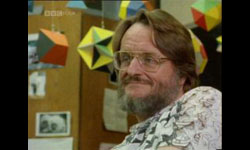
Andrew Wiles stumbled across the world\'s greatest mathematical puzzle, Fermat\'s Theorem, as a ten- year-old schoolboy, beginning a 30-year quest with just one goal in mind - to solve the problem that has baffled minds for three centuries.
- TV-Recordings
- Maths
- TV-Recordings
- No subtitles
- 50
Andrew Wiles stumbled across the world\'s greatest mathematical puzzle, Fermat\'s Theorem, as a ten- year-old schoolboy, beginning a 30-year quest with just one goal in mind - to solve the problem that has baffled minds for three centuries.
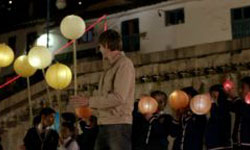
Brian Cox explores the ingredients needed for an intelligent civilisation to evolve in the universe - the need for a benign star, for a habitable planet, for life to spontaneously arise on such a planet and the time required for intelligent life to evolve and build a civilisation.
- TV-Recordings
- English subtitles
- 60
Brian Cox explores the ingredients needed for an intelligent civilisation to evolve in the universe - the need for a benign star, for a habitable planet, for life to spontaneously arise on such a planet and the time required for intelligent life to evolve and build a civilisation.
This special episode of Horizon launches the £10 million Longitude Prize 2014 - a prize developed by Nesta, with Technology Strategy Board as funding partner, to find solutions to a new scientific challenge.
- TV-Recordings
- General Science
- English subtitles
- 60
This special episode of Horizon launches the £10 million Longitude Prize 2014 - a prize developed by Nesta, with Technology Strategy Board as funding partner, to find solutions to a new scientific challenge.

Dallas Campbell delves into the Horizon archive to discover how our understanding of intelligence has transformed over the last century. From early caveman thinkers to computers doing the thinking for us, he discovers the best ways of testing how clever we are - and enhancing it.
- TV-Recordings
- Medical Sciences
- TV-Recordings
- No subtitles
- 60
Dallas Campbell delves into the Horizon archive to discover how our understanding of intelligence has transformed over the last century. From early caveman thinkers to computers doing the thinking for us, he discovers the best ways of testing how clever we are - and enhancing it.

Famed for their ability to inflict Armageddon from outer space, asteroids are now revealing the secrets of how they are responsible for both life and death on our planet.
- TV-Recordings
- Astronomy
- Physics
- TV-Recordings
- English subtitles
- 58
Famed for their ability to inflict Armageddon from outer space, asteroids are now revealing the secrets of how they are responsible for both life and death on our planet.
-
Horizon: The Big Bang
-
BBC 4
Professor Jim Al Khalili delves into over 50 years of the BBC science archive to tell the story behind the emergence of one of the greatest theories of modern science, the Big Bang.
- TV-Recordings
- Astronomy
- Physics
- TV-Recordings
- No subtitles
- 60
Professor Jim Al Khalili delves into over 50 years of the BBC science archive to tell the story behind the emergence of one of the greatest theories of modern science, the Big Bang.